
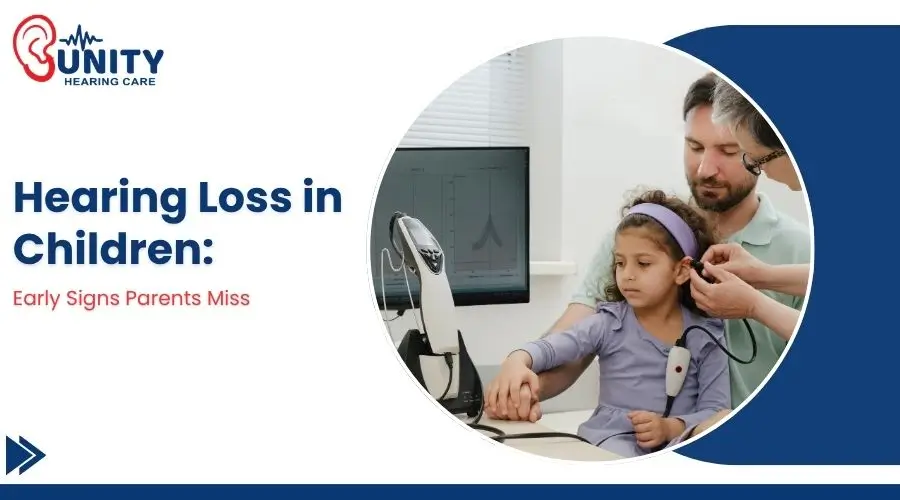
Hearing Loss in Children: Early Signs Parents Miss
Hearing plays an important role in a child’s speech, language development, learning, and social interaction. However, hearing difficulties are not always easy to recognize. Some children respond to familiar sounds but struggle to understand words, while others may appear distracted when they cannot hear instructions clearly.
Recognizing the early signs of hearing loss in children can help parents seek timely assessment and support their child’s communication development. Whether a child is a newborn, toddler, or school-aged, noticing changes in how they respond to sounds can make a meaningful difference.
What Is Hearing Loss in Children?
Pediatric hearing loss refers to reduced hearing ability in babies, toddlers, and older children. It can affect one ear or both ears and may be present at birth or develop later during childhood. The degree of hearing loss can range from mild to profound, and some children may have difficulty hearing particular frequencies rather than all sounds.
Hearing loss in childhood can affect how children recognize speech, learn new words, follow classroom lessons, and interact with others. Some children develop communication skills more slowly because they do not consistently hear the sounds around them.
Early identification does not guarantee that every difficulty will be prevented, but it can help families understand their child’s needs and explore appropriate support.
Early Signs of Hearing Loss Parents Often Miss
The signs can be subtle, especially when children find ways to compensate for sounds they cannot hear clearly. Parents and caregivers should pay attention to patterns rather than relying on one isolated incident.
1. Not Responding When Their Name Is Called
A child who frequently fails to respond when their name is called may be experiencing hearing difficulties. They might respond when someone is nearby or facing them but miss the same words when the speaker is behind them.
Not responding does not automatically mean hearing loss; children can also become distracted or absorbed in play. However, repeated concerns deserve attention.
2. Delayed Speech and Language Development
Children learn spoken language partly by listening to people around them. If they cannot hear speech clearly, they may have difficulty learning new words, copying sounds, or forming age-appropriate sentences.
Possible signs include unclear speech, limited vocabulary, difficulty repeating words, or slower language development than expected. Speech delay can have several causes, so a professional assessment may include both hearing and speech-language evaluation.
3. Difficulty Following Instructions
Some children regularly ask people to repeat themselves or follow instructions only when gestures are used. They may appear inattentive at home or school, particularly when directions are given from another room.
If a child understands better when they can see the speaker’s face, hearing difficulties may be one possible explanation.
4. Turning Up the TV Volume
A child who consistently prefers television, videos, or other devices at a higher volume than the rest of the family may be trying to hear more clearly. They may also sit very close to a speaker or frequently ask for the volume to be increased.
This behaviour alone cannot diagnose hearing loss, but it is worth discussing with a qualified professional if it happens regularly.
5. Difficulty Hearing in Noisy Environments
Background noise can make conversations harder to understand, especially for children with hearing difficulties. A child may struggle to follow classroom discussions, understand friends in a busy playground, or respond during family gatherings.
Parents might notice that the child hears better in quiet rooms but misses words when several people are talking.
Signs can vary from child to child, and developmental milestones are not identical for every child.
Signs of Hearing Loss by Age
- Babies: May not consistently startle at loud sounds or respond to familiar voices.
- 6–12 months: May show limited responses to sounds or have difficulty developing expected sound-related communication behaviours.
- Toddlers: May have delayed speech, limited spoken words, or difficulty following simple verbal directions.
- Preschool and school-aged children: May struggle to understand conversations, follow classroom instructions, or hear speech in noisy settings.
These observations are not a diagnosis. If a baby or child does not respond to sounds as expected, parents should arrange an age-appropriate hearing assessment rather than waiting for speech delays to become more obvious.
Common Causes of Hearing Loss in Children
The causes of pediatric hearing loss vary depending on a child’s age, medical history, and ear health. Common causes include:
- Genetic factors: Some children are born with inherited hearing conditions.
- Complications around birth: Prematurity, low birth weight, and severe newborn jaundice may be associated with an increased risk.
- Infections: Certain infections during pregnancy or childhood, including rubella and meningitis, can affect hearing.
- Middle-ear problems: Fluid buildup and recurring ear infections may cause temporary or persistent hearing difficulties.
- Noise exposure: Repeated exposure to excessively loud sounds can damage hearing.
- Other medical factors: Head injuries and certain medicines can affect hearing in some circumstances.
These are possible causes, not a diagnosis. A healthcare professional can assess the child and determine whether further ear or hearing investigations are needed. The World Health Organization identifies early detection and appropriate care as important parts of childhood hearing management.
When Should Parents Get a Child's Hearing Test?
Parents should arrange a hearing assessment if their child shows repeated signs of hearing difficulty, has delayed speech development, or struggles to understand conversations. A child should also receive appropriate follow-up if they do not pass a newborn hearing screening.
Do not wait for a child to grow out of the problem if hearing concerns persist. Passing an earlier screening does not rule out hearing loss that develops later.
A hearing assessment may be particularly important when there is a family history of hearing loss, a history of certain infections, or other known risk factors. If hearing changes occur suddenly, or are accompanied by severe ear pain, discharge, dizziness, or other concerning symptoms, seek prompt medical advice.
How Is Hearing Loss Diagnosed in Children?
A child's hearing is assessed using age-appropriate tests selected by a qualified hearing professional. Depending on the child's age and needs, these may include:
- Otoacoustic emissions (OAE): Measures responses produced by the inner ear.
- Auditory brainstem response (ABR): Measures the hearing pathway's response to sound and can be useful for babies who cannot respond to instructions.
- Visual reinforcement audiometry (VRA): Uses visual rewards to encourage young children to respond to sounds.
- Play audiometry or standard hearing tests: Uses play-based activities or responses to sounds, depending on the child's developmental stage.
Not every child needs every test. A professional may also ask about birth history, ear infections, family history, and speech development. If a screening result raises concern, a full hearing evaluation is important.
How Unity Hearing Care Can Help
Unity Hearing Care provides comprehensive hearing care services for children and adults, helping families understand their hearing needs and explore suitable support. Our services include comprehensive hearing assessments, hearing aid evaluations and fittings, speech and language therapy, cochlear implant consultancy, tinnitus management, and custom hearing protection.
If your child shows signs such as delayed speech, inconsistent responses to sounds, or difficulty following conversations, a professional hearing assessment can help identify whether hearing difficulties may be contributing to these concerns. Depending on the findings, further evaluation or support from an ENT specialist or other qualified professional may be recommended.
Our support also extends beyond the initial purchase of hearing aids. We provide after-sales services to help customers with ongoing hearing aid support, care, and maintenance. For families and individuals seeking continued assistance, our team can explain the available services and guide them on the next steps.
If you are concerned about your child's hearing or speech development, contact Unity Hearing Care in Vapi to learn more about our hearing assessment services and support options.
Conclusion
Hearing loss in childhood can sometimes go unnoticed because its early signs resemble distraction, shyness, or delayed speech. Parents who notice repeated difficulty responding to sounds, understanding instructions, or developing spoken language should seek a professional hearing assessment rather than waiting for the signs to disappear.
Early identification and appropriate support can help children access communication, learning, and social opportunities. If you are concerned about your child’s hearing, contact Unity Hearing Care in Vapi to ask about available assessment services and the next steps.
FAQs
1. What is pediatric hearing loss?
Pediatric hearing loss is reduced hearing ability in babies, toddlers, and children. It may affect one or both ears and can be present at birth or develop later.
2. What are the early signs of hearing loss in children?
Common signs include not responding consistently to their name, delayed speech, frequently asking people to repeat themselves, turning up the TV volume, and struggling to hear in noisy environments.
3. What is the common cause of deafness in childhood?
There is no single cause for all children. Genetic factors, certain infections, complications around birth, and middle-ear conditions can contribute to childhood hearing loss.
4. Can hearing loss cause speech delay?
Yes. Hearing difficulties can make it harder for a child to hear and learn speech sounds and words. However, speech delay can have other causes, so hearing and language development may both need assessment.
5. When should a child have a hearing test?
A child should have a hearing assessment whenever parents or caregivers have concerns about hearing or speech development. Babies who do not pass newborn screening need timely follow-up testing.
